parking lot striping, ADA markings, fire lanes and curb painting
Texas Regulations for Parking Lot Striping and Stencils
Maintaining Compliance and Safety
In the state of Texas, keeping your parking lot stencils sharp, clear, and highly visible isn’t just about curb appeal—it is a legal obligation. Under the Texas Accessibility Standards (TAS), businesses must follow strict guidelines regarding accessible parking spaces, layout markings, and directional signage to guarantee safety and public accessibility.
Essential Stencil and Marking Requirements
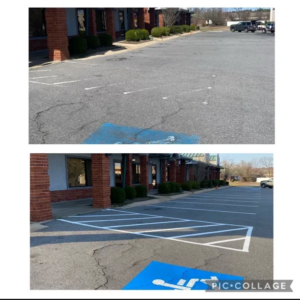
- Accessible (Handicap) Parking: The TAS mandates that every accessible parking space must feature the International Symbol of Accessibility. This emblem needs to be painted directly onto the pavement using a high-contrast color that stands out against the asphalt or concrete. Furthermore, the adjacent passenger loading zones (access aisles) must clearly display “NO PARKING” in large, prominent lettering.
- Designated Fire Lanes: To ensure emergency vehicles have unhindered access at all times, fire lanes and commercial loading zones must be explicitly marked. Clear lane designations help your business maintain operational efficiency while meeting local safety codes.
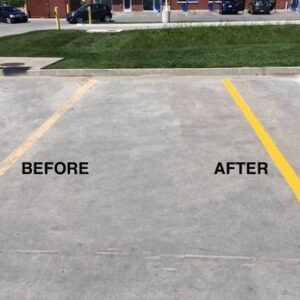
- Routine Upkeep: Texas law requires all pavement markings to remain easily readable. Over time, heavy traffic and sun exposure will wear down paint; allowing stencils to fade can result in hefty fines and increased liability risks. Regular re-striping with durable, commercial-grade materials is necessary to stay compliant.
Blending State and Federal Laws (ADA)
Beyond local Texas statutes, property owners must also satisfy federal Americans with Disabilities Act (ADA) guidelines. The ADA requires a dual-signage system for accessible stalls: both painted ground stencils and mounted vertical signs must be present. This ensures the spots are completely identifiable from a distance or if a vehicle is parked over the ground marking.
By prioritizing clear pavement markings, you protect your business from legal penalties while creating a safe, easy-to-navigate environment for all visitors.
For exact dimensional layouts and technical specifications, property owners can consult the official compliance handbooks provided by the Texas Department of Licensing and Regulation (TDLR) and the federal ADA websites.